Bring Free Play to Your School
About Free Play for Kids
Free Play for Kids is a registered charity founded in 2007 in Edmonton as Free Footie. What started as a weekly free soccer program for kids quickly expanded to include basketball, hockey, and flag football, leading us to the rebrand. Within our years of service, the critical need for safe community spaces was evident, and we responded by growing from one day a week to every day.
This means we double as free childcare, so families can save money for essential needs. Free Play supports 4,500 families per year through our various programs:
Welcome to Play for Newcomers
Free to Play (Grade 3-6)
“Jr. Wolves” / Intro to Play to Lead (Grade 5-6)
“Wolves” / Play to Lead (Grade 7-12)
What We Provide






Our Approach
Our mission is to empower communities through play. We provide safe, accessible, and inclusive after-school programs for kids in grades 3-12 through our various programs. We believe in holistic support and positive youth development through a three-pillared curriculum of physical literacy, nutritional literacy, and, most importantly, social-emotional learning - taken together, these aspects create our “Sport to Life” curriculum and help us achieve our overall goal of creating meaningful, generational change by empowering future leaders to be change makers within their communities.
Free Play for Kids’ Daily After-school Program for Elementary Schools
FREE TO PLAY
The Free to Play program is our flagship program; it provides daily after-school programming in 24 schools across Edmonton for Grades 3-6 students. Each school has 25 available spots, and registration is done in collaboration with school staff to help support kids with the highest needs and the least access.
Operating Monday through Friday from 3:00 to 5:00 p.m. (1:00 to 6:00 p.m. on early-dismissal Thursdays), the program is built to support the whole child, physically, emotionally, and socially, through active play, caring mentorship, and life skill development. Research shows that without consistent quality programming/mentorship during these “critical hours” after school, vulnerable kids and youth are more likely to fall susceptible to social isolation, physical inactivity, and poorer mental/emotional health outcomes.
Free to Play is intentionally designed to be inclusive, trauma-informed, and culturally responsive, creating a consistent, safe space for students to play, belong, and grow. Kids participating in the program receive at least 60 minutes of daily physical activity, daily snacks, daily social-emotional learning lessons, weekly nutritional literacy lessons, and the opportunity to participate in a variety of special events.
What a “Regular” Free to Play Day Looks Like
“Regular” days are Mon/Tues/Wed/Friday, where the program is delivered directly in schools, allowing students to transition seamlessly from their classrooms into Free to Play. As soon as the bell rings, kids are greeted by two trained staff - a Head Coach and an Assistant Coach – who not only guide the day’s activities but also build meaningful, year-round relationships with participants.
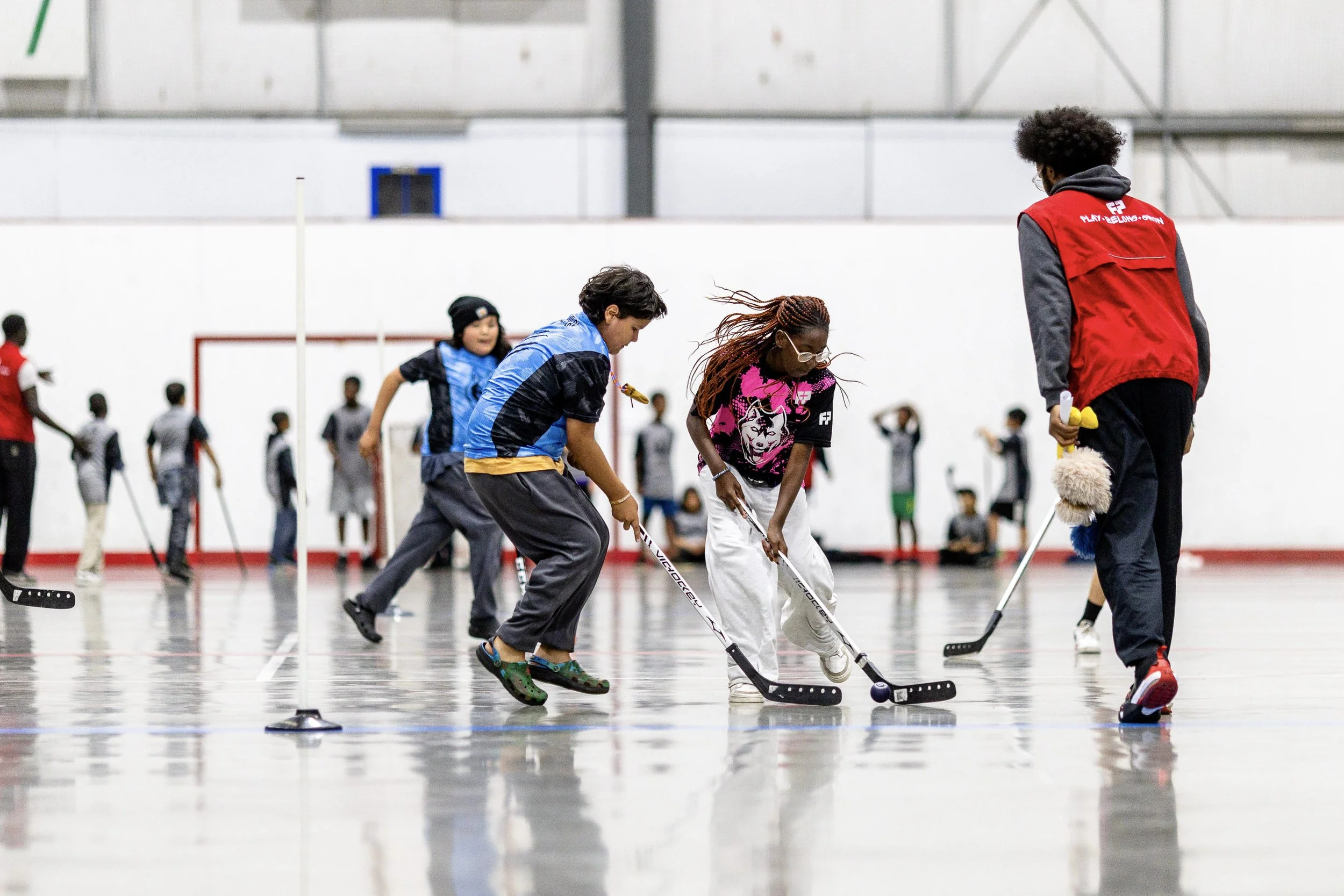
Each day begins with a healthy snack and is followed by a mix of FUN sport-based physical activity that includes non-competitive games in sports such as soccer, basketball, football, and ball hockey. Woven into each physical activity is a social-emotional learning activity that addresses topics such as managing emotions, making friends, resolving conflict, and coping with anxiety—essential life skills for thriving both in and out of the classroom. These activities are built to safely challenge participants while ensuring every child can participate, no matter their abilities.
Thursday Free to Play “Game Days”
Thursdays are a highlight of the program. With early school dismissal, Free to Play offers an extended experience from 1:00 to 6:00 p.m.
As soon as the bell rings, students meet their coaches and hop on a bus that take them to a larger recreation facility/school gym, to participate in a weekly festival. Kids receive a food literacy class covering a topic from our “Food to Play” curriculum, as well as a take-home food hamper filled with ingredients to make the newly learned recipe for themselves or their siblings.
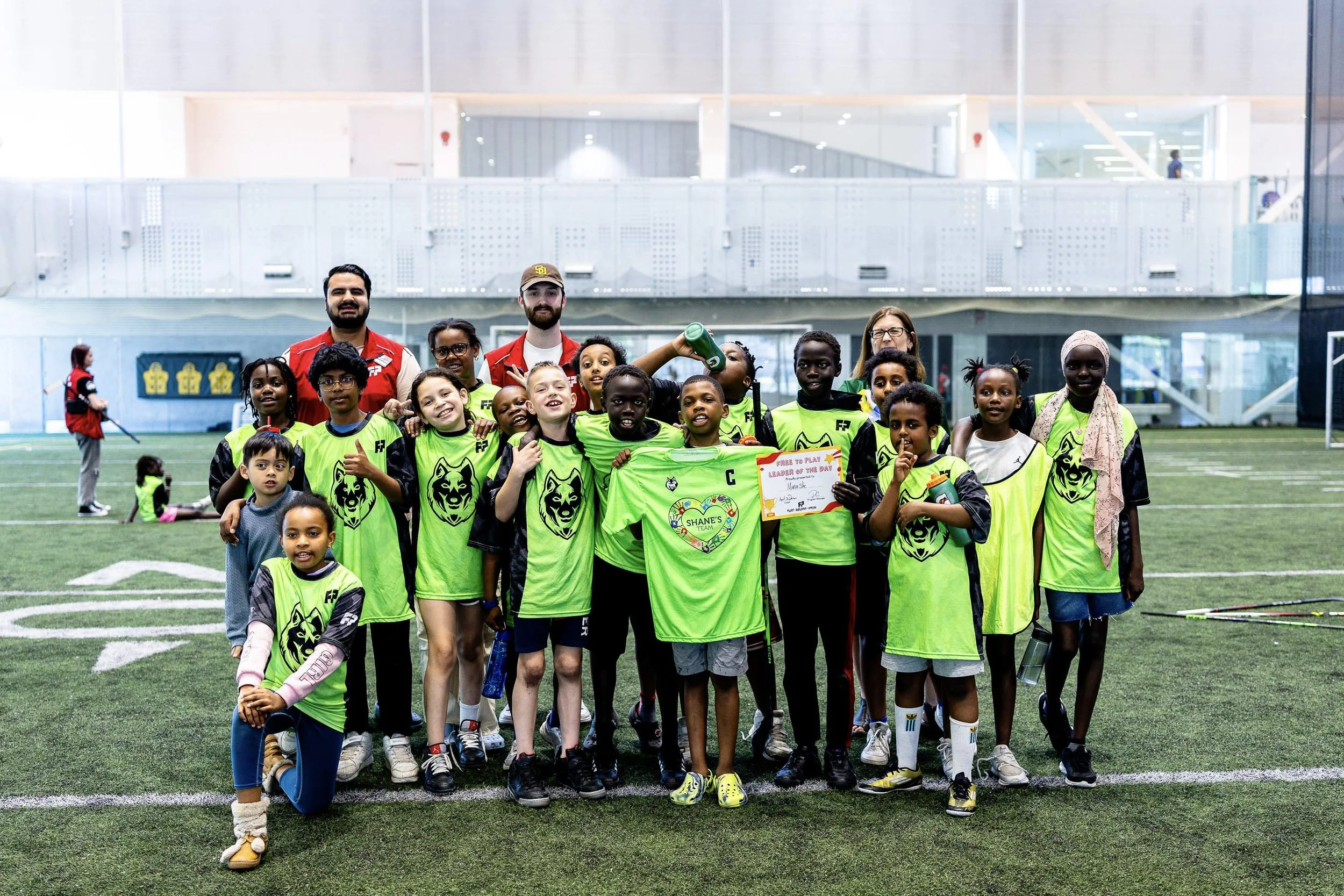
Afterwards, kids participate in a fun tournament, where they meet and play with kids from other schools in the program. Here, they can practice their social-emotional skills and sport skills from the week! The sport for the tournaments rotates weekly between ball hockey, basketball, soccer, and flag football. Thursdays provide kids with new and positive opportunities to learn more about foods, to become familiar with game play, and to build social connections within their communities. At the end of every festival, we celebrate one student from each school as a “Leader of the Week” for their efforts and good work.
Trained, Certified and Experienced Staff
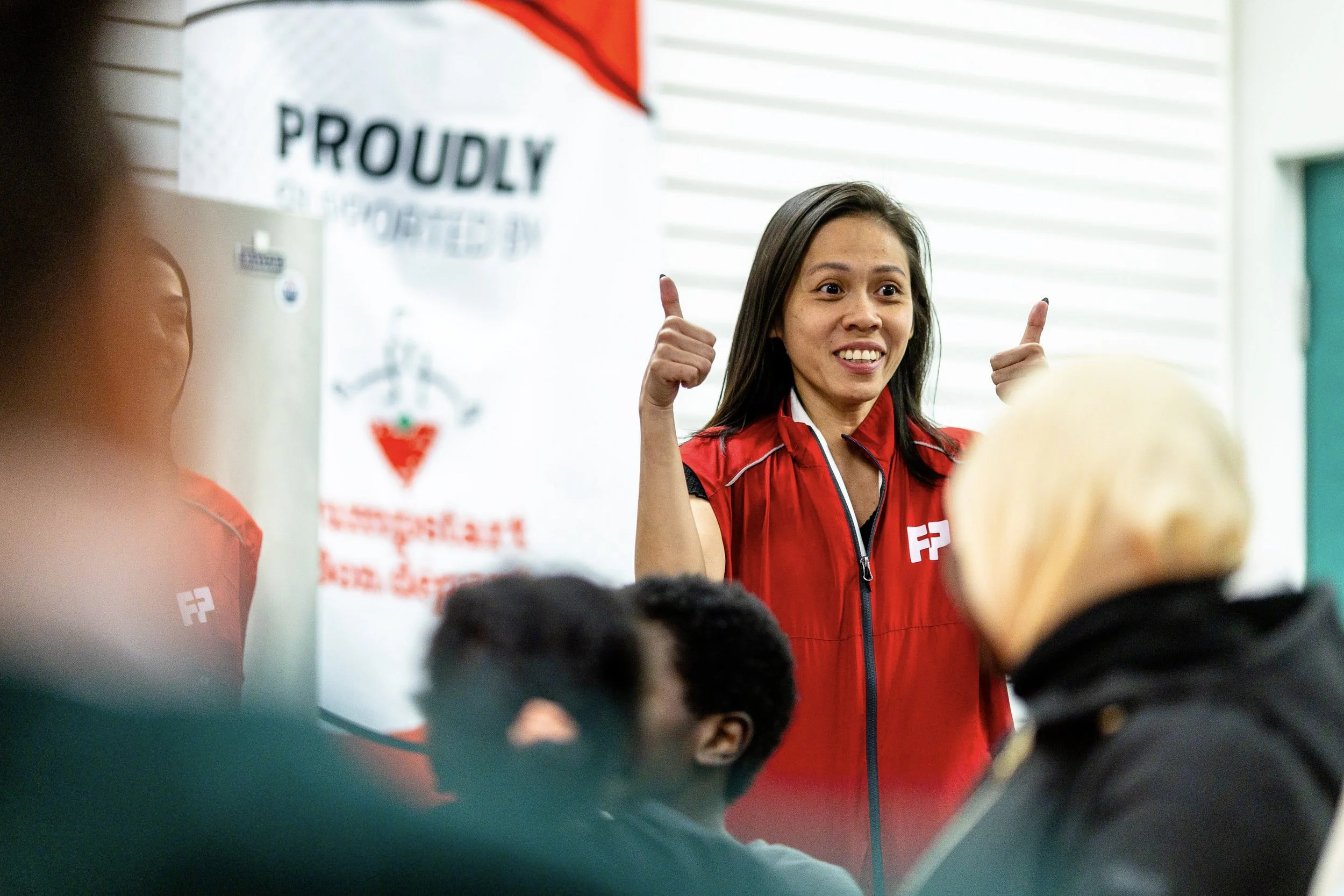
Each Free to Play site is led by two dedicated staff: a Head Coach and an Assistant Coach. These leaders serve as consistent mentors throughout the school year - spending over 400 hours with students - they are a trusted bridge between the school, the students, and their families. Our staff are recruited from the same communities the program serves, helping students see themselves reflected in leadership.
In addition to their lived experience, each staff member receives comprehensive training in areas such as:
High Five® Healthy Child Development
Non-Violent Crisis Intervention
Respect In Sport
Welcoming All Abilities
Keeping Girls in Sport
Indigenous Culture Awareness training, and others.
Free to Play staff are also trained, every week, on our research-backed curriculum, “Sport to Life”. In addition, all leaders have backgrounds in sport, recreation, childcare, childhood development, and/or social work.
Research-backed Curriculum
Our internal, research-backed “Sport to Life” curriculum and activity sessions were developed by two PhD candidates and a Kinesiology professor from the University of Alberta. The focus is on FUN sport-based physical activity that builds mental and emotional health by fostering social inclusion and belonging, a sense of community, physical literacy, and a positive first exposure to play/sport. Topics that are covered include: Trying New Things, How to Play with Others, How to Believe in Myself, and How to Celebrate Others. “Sport to Life” has recently been transformed into a 25-hour Continuing Education course at MacEwan University. The “Food to Play” curriculum is designed and delivered by a certified nutritionist. The curriculum covers topics such as key nutrients, hydration, balanced eating, and the connection between food and mental/emotional health.
Outcomes + Impact
We monitor outcomes and impact through caregivers and participants surveys, conducted three times a year. This helps us measure changes in physical activity, emotional well-being, social connection, and overall program satisfaction. The feedback we gather ensures that our programming remains responsive, effective, and aligned with the needs of the children and communities we serve.
100%
of kids feel safe
at Free Play
90%
of kids have made
new friends
94%
of parents felt that Free Play acts as a mental health resource
90%
of kids’ school
grades have
improved
How We Can Work Together
Program Needs
For the program to operate, we partner with districts and schools to reduce costs and maintain accessibility. The main requirements of the program to operate in a school are as follows:
1. After-School Gym Access
Access to the gym Monday–Friday, 3:00–6:00 PM
Extension to 7:00 PM where possible to support programming needs
2. Lunchtime Gym Access (In-School Sessions)
Access to the gym 3–4 times per week during lunch
Focus on increasing girls’ participation in sport and play
Lunch programming has proven to be the most effective way to reach girls
3. On-Site Workspace (Regional Manager Support)
Access to a shared space (staff room, library, office, etc.)
1–2 times per week, between 12:00–3:00 PM
Supports coach supervision, program quality, and school integration
3. On-Site Storage Space
Access to a storage space for sports equipment (hockey sticks, pinnies, jerseys, etc.) and non-perishable snacks.
Program Costs
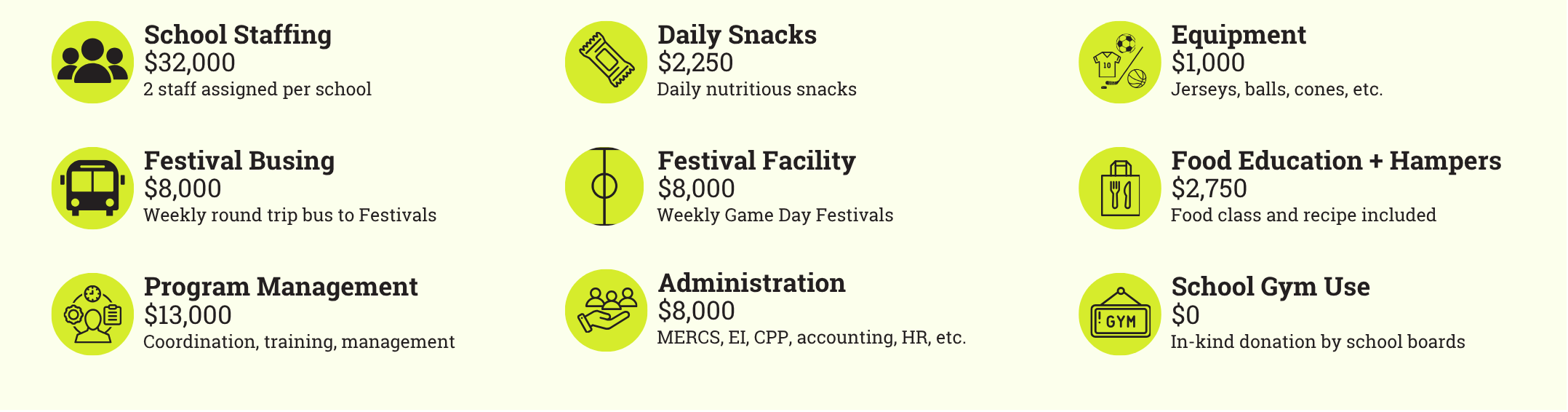
The total cost to operate Free to Play annually is $75,000* per school, based on 25 participants and 36 weeks of programming. There is no cost to the school, as Free Play actively secures funding through grants, sponsorships, and individual donors to keep the program free for families.
*subject to change